
Debunked
A multitude of anti-Zionist myths are circulating.
You can find out why they are myths here.
1. Myth
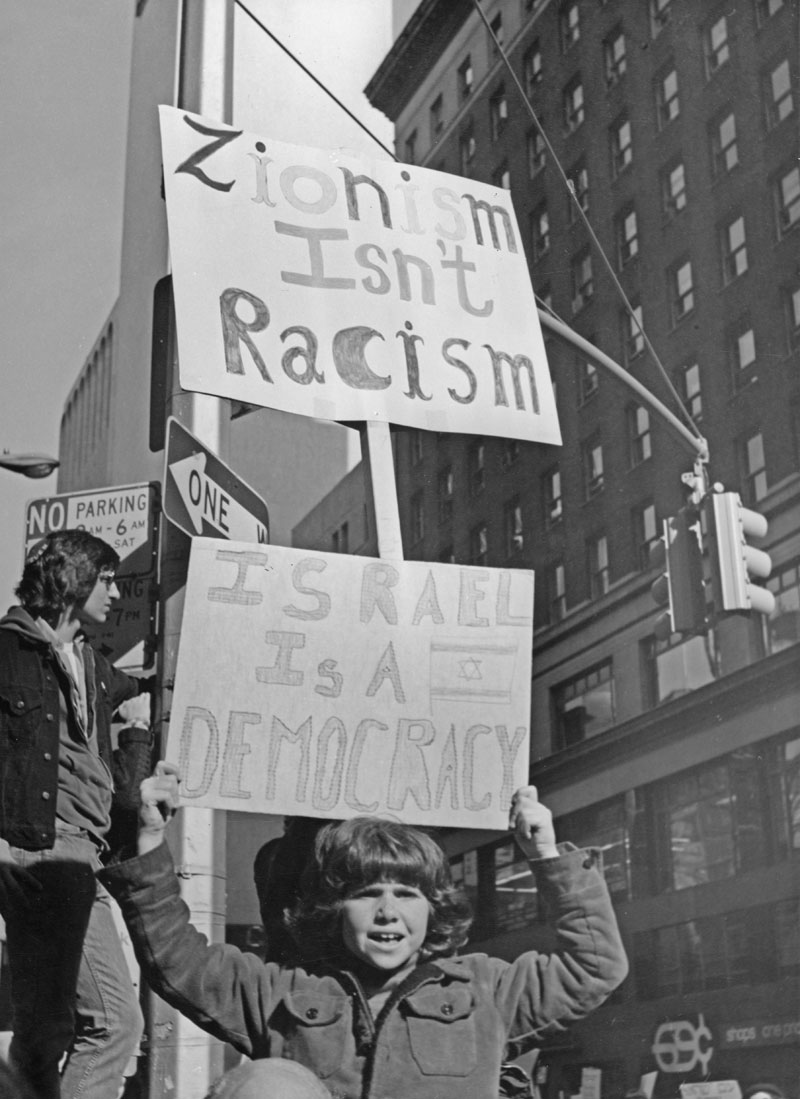
Zionism is racism
Not true, because...
The claim that Zionism is a form of racism is incompatible with the character and ideological foundations of the movement. Zionism stands for enabling Jewish self-determination. It is not a claim of superiority, but an expression of the right to national sovereignty. Zionism is comparable to other national movements that emphasize the pursuit of self-determination and security.
Israel’s Declaration of Independence guarantees equal rights for all citizens, regardless of religion or ethnicity [1]. Non-Jewish Israelis—including Arab citizens of Israel, who make up over 20 percent of the population [2]—enjoy full civil rights and actively participate in public life. As in any society, interpersonal racism can occur in Israel, but it is neither systemic nor rooted in Zionist ideology. All Israeli citizens, whether Jewish or non-Jewish, are equal before the law.
One reason this prejudice became widespread was United Nations Resolution 3379, passed in 1975, which labeled Zionism as a form of racism and racial discrimination [3]. This resolution emerged in a politically charged Cold War climate, shaped by geopolitical interests and driven in large part by pressure from certain Arab and communist dictatorships. It was highly controversial from the outset and rejected by many democratic states. In 1991, the resolution was officially revoked by Resolution 46/86 with an overwhelming majority [4], thereby correcting the discriminatory and false judgment made in 1975.
[1] die_unabhaengigkeitserklaerung_des_staates_israel.pdf
[2] https://www.cbs.gov.il/he/publications/doclib/2024/yarhon0724/b1.pdf

2. Myth
Zionism demands the expulsion of Palestinians
Not true, because...
Despite the turmoil of the 1948 war, around 150,000 Arab residents remained in Israel and were granted citizenship [1]. Their descendants today form the Arab national minority, which constitutes about 20 percent of Israel’s population and enjoys full civil rights [2]. The Arab population of Israel has grown steadily since the state’s founding—a reflection of their lasting presence and participation in Israeli society. This development contradicts the claim that Zionism aimed for the systematic expulsion of the Arab population.
Many key Zionist figures—including Theodor Herzl (the founder of modern Zionism) and David Ben-Gurion (Israel’s first Prime Minister)—viewed coexistence and good relations with the Arab population as essential political goals.
Throughout the history of the Israeli-Arab conflict, displacement occurred on both sides as a consequence of warfare. During the 1948 Israeli-Arab War (known in Israel as the War of Independence or Liberation War, and in the Arab world as the Nakba—”catastrophe”), approximately 700,000 Palestinians left their homes. The overwhelming majority fled in anticipation of, or in response to, the ongoing fighting. Other causes included economic hardship or calls by local Arab leaders. Some were expelled by Israeli forces, primarily for military reasons [3].
Less widely known is that Jews were also expelled: numerous Jewish communities were forced to abandon their historic homes, including residents of places like Jerusalem, Gush Etzion, and Hebron. The Old City of Jerusalem, which was home to a Jewish community with a continuous presence for thousands of years, was entirely emptied of its Jewish residents, who were forcibly removed following its conquest by Jordanian forces in 1948 [4].
Moreover, it is often overlooked that during the 20th century, approximately 850,000 Jews were expelled or forced to flee from Muslim-majority countries such as Iraq, Egypt, Syria, and Yemen. These Jewish refugees lost their homes, property, and livelihoods, but found refuge and the opportunity to rebuild their lives in Israel. Today, virtually no Jewish communities remain in many of those countries [5].
It is therefore paradoxical to accuse Zionism of promoting expulsion, while Israel’s Arab population continues to grow and thrive freely, and Jewish communities in many Arab countries were effectively wiped out through discrimination, persecution, and expulsion—an often ignored or downplayed reality.
Displacement was a tragic consequence of the conflict, not the goal of Zionism. The notion that Zionism inherently calls for the expulsion of Palestinians contradicts the historical facts.
[2] https://www.cbs.gov.il/he/publications/doclib/2024/yarhon0724/b1.pdf
[3] https://www.mena-watch.com/zionistisches-denken-und-bevoelkerungstransfer/
[4] https://www.jpost.com/opinion/ethnic-cleansing-memories-of-1929-and-1948-467459

3. Myth
Zionism means supporting every decision made by the Israeli government
Not true, because...
The idea that Zionism automatically implies support for all political decisions made by the Israeli government is misleading. In reality, Zionism encompasses a wide political spectrum with many differing views and positions. At its core, Zionism means supporting the Jewish right to self-determination. Beyond that, however, there is no monolithic Zionist worldview. People who identify as Zionists can hold vastly different values, political ideologies, and opinions on a range of issues, whether related to society, the economy, the role of religion, or matters of war and peace.
Zionism brings together people from the political left and right, secular and religious communities, and liberal and conservative camps. Despite this shared foundation, their views on political issues or the actions of the Israeli government can vary widely. A striking example is the protest movement in Israel that has mobilized hundreds of thousands of people since 2023. With Israeli flags in hand, these demonstrators—most of whom identify as Zionists—protest against the government’s policies [1].
Within the Israeli political system, Zionist (as well as non-Zionist) parties and actors regularly criticize one another, whether in the governing coalition or in the opposition. This is a reflection of a vibrant democratic culture. The diversity of opinions clearly shows that support for the Jewish right to self-determination in Israel does not automatically entail agreement with every single decision made by the government.
[1] https://www.dw.com/de/wieder-massenproteste-gegen-israels-regierung/a-69448090

4. Myth
Zionism is fundamentally incompatible with the existence of a Palestinian state
Not true, because...
The question of a Palestinian state—whether it should be established, how it could be created, and what form it should take—is the subject of ongoing and intense international debate.
Zionism itself is not inherently opposed to the creation of a Palestinian state. Rather, its central focus is the right to a secure Jewish state. Many Zionists, including former Israeli prime ministers, have supported the idea of a two-state solution: a peace framework in which a Jewish and a Palestinian state exist side by side as independent and peaceful neighbors. However, this vision remains controversial, as differing expectations and complex political realities continue to complicate the process.
Israel has demonstrated its commitment to peaceful coexistence with a future Palestinian state in various negotiations, including the Oslo Accords and the Camp David Summit [1].
At the same time, it is important to acknowledge that many people around the world are not interested in peaceful coexistence. Instead, they view a Palestinian state as a replacement for the Jewish state and openly call for the destruction of the State of Israel in the name of establishing a Palestinian one. This position is clearly incompatible with the core principles of Zionism.

5. Myth
Zionism is the main cause of antisemitism
Not true, because...
Hostility toward Jews has existed for thousands of years and long predates the establishment of the modern State of Israel or the Zionist movement. In ancient times, the Middle Ages, and the modern era, Jews have repeatedly been victims of hatred, discrimination, and persecution [1].
Those who sought to spread hatred against Jews have always invented new justifications that reflected the spirit of the times—whether religious, economic, cultural, or racial. Antisemitism has continually adapted, recycling old prejudices in new forms. Today, traditional antisemitic stereotypes are often projected onto the State of Israel, as it is perceived by many as the embodiment of Jewish identity [2].
Antisemitism targets not only Jews who support Zionism, but also Jewish communities that reject Zionism or have no connection to Israel. In the 20th century, Jews in Muslim-majority countries such as Egypt, Iraq, and Yemen were persecuted and expelled, despite the fact that many of them did not hold Zionist beliefs. Similarly, the victims of the Russian pogroms in the late 19th and early 20th centuries were mostly Orthodox Jews with no Zionist ambitions. And during the Shoah (Holocaust), Jews were systematically persecuted and murdered regardless of their political views. These examples show clearly that antisemitism is not caused by Zionism, but is rooted in long-standing antisemitic prejudices.
Justifying hatred and violence against Jewish people in the Diaspora by pointing to Israel or Zionism is not only illogical—it ironically underscores the very reason why a sovereign Jewish state is necessary as a refuge for Jews around the world. It demonstrates that Jewish people, regardless of their connection to Israel, remain under threat, and that a safe haven for their protection continues to be essential.
6. Myth
Zionism is a colonialist project
Not true, because...
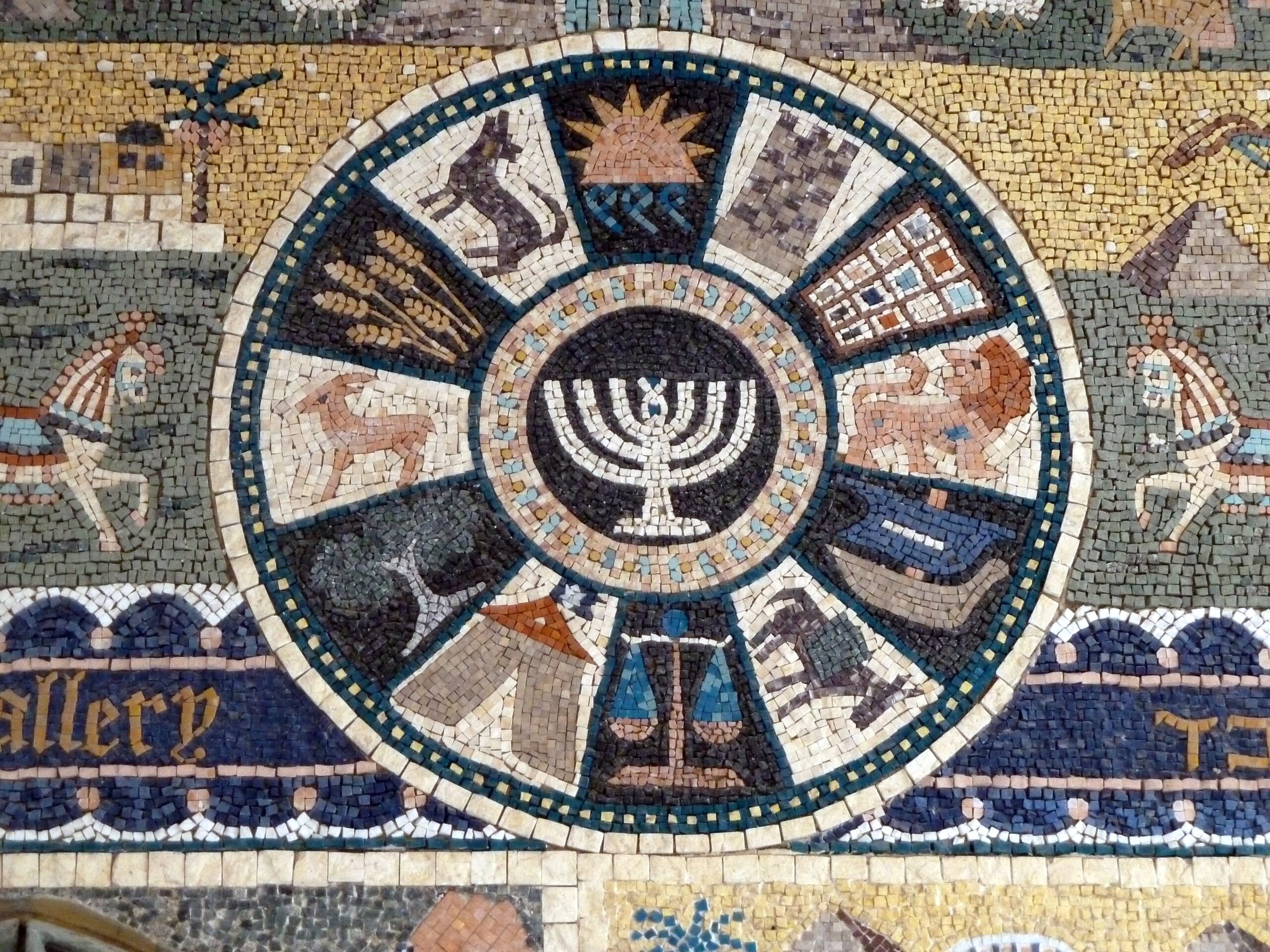
Zionism is fundamentally different from colonialism. Jews have a historical, cultural, and spiritual connection to the Land of Israel that spans over 3,000 years. This connection is supported by archaeological evidence, historical records, and religious texts. Unlike classical colonial movements, which operated under the authority of distant imperial governments, Jewish returnees acted not on behalf of an empire, but as a stateless people seeking a safe refuge in their ancestral homeland after centuries of persecution.
The region of Judea, part of the historical Land of Israel, was renamed the Roman province Syria Palaestina (Palestine) in the 2nd century CE by the Roman emperor. Following the suppression of the Bar Kokhba revolt (132–135 CE), the Romans deliberately aimed to erase the Jewish connection to the land. They chose the name Palestine, derived from the Philistines—historic enemies of the Jewish people [1].
The current Arab majority population in many parts of the Middle East is largely the result of Islamic expansion in the 7th century. These conquests brought intentional settlement, cultural Arabization, and demographic transformation to the region [2]. Indigenous peoples such as Jews, Imazighen, Kurds, Copts, and Assyrians were subjugated, displaced, or assimilated, and their cultural and religious identities were often marginalized. Ottoman rule over Palestine, which lasted until 1917, represents another chapter of imperial domination that further altered the region’s demographics and political structure. By contrast, Zionism represents the return of an indigenous people to its historical homeland—not the imposition of a foreign empire. The deliberate effort to deny Jewish history in the Land of Israel while simultaneously distorting the origins of the region’s Arab population is less about historical accuracy and more about a political agenda aimed at delegitimizing Jewish sovereignty [3].
Unlike colonialism, there is no attempt in Israel to force any population group to abandon its religion, culture, or language. Street signs and official documents in Israel are written in three languages: Hebrew, Arabic, and English. Arab citizens of Israel can attend Arabic-language schools, practice their religion freely, and maintain their cultural traditions.
Zionism is not a colonialist movement but a liberation project—an effort by an indigenous people to restore its right to self-determination in its historical homeland. In fact, the founding of the State of Israel can be more accurately understood as a process of decolonization—liberating the land from centuries of Ottoman and later British imperial control. The claim that Zionism is colonialism ignores the deep Jewish connection to the land and distorts historical reality.
[1] https://www.deutschlandfunk.de/vor-1950-jahren-in-judaea-als-die-roemer-jerusalem-100.html
[2] https://besacenter.org/palestinians-settlers-colonialism/

7. Myth
Zionism denies equal rights to non-Jews
Not true, because...
Zionism is the national liberation movement of the Jewish people. Its aim is to secure the Jewish right to self-determination in their historical homeland—not to oppress or marginalize non-Jews. From the beginning, Zionism has included a vision of peaceful coexistence with other communities.
Israel’s Declaration of Independence explicitly guarantees equal social and political rights to all citizens, regardless of religion, ethnicity, or gender [1]. Israel is a democracy in which non-Jewish citizens have full rights, including voting, civil liberties, and access to public office. They hold prominent roles in the judiciary, politics, and broader society. The Israeli legal system actively protects minority rights and ensures religious freedom and cultural autonomy for all communities.
8. Myth
Zionism seeks to control all the land “from the river to the sea”
Not true, because...
This myth is based on the assumption that Zionism aims for Israeli expansion across the entire Middle East, or that all Zionists seek full control “from the river to the sea.” In reality, Zionism encompasses a range of political currents with differing views on Israel’s borders. Some Zionists support territorial compromise. Historical examples—such as the return of the Sinai Peninsula to Egypt in the 1979 peace treaty or the 1994 peace agreement with Jordan—demonstrate Israel’s willingness to accept stable, peaceful borders and to make compromises in pursuit of peace.
See also the myth: Zionism is fundamentally incompatible with the existence of a Palestinian state.

9. Myth
Zionism has no Arab or Muslim supporters
Not true, because...
The idea that Zionism receives no support from Arab or Muslim individuals is a misleading oversimplification. Arab and Muslim voices are increasingly recognizing the Jewish people’s right to self-determination in their historical homeland.
For many years, anti-Zionism was promoted as a core element of Arab and Muslim identity. However, this stance has brought little benefit to the Middle East. On the contrary, it has fueled conflict and wasted valuable resources—harming both Jews and Arabs.
In recent years, however, a shift began. The Abraham Accords, which facilitated the normalization of relations between Israel and several Arab states, are a clear example of this positive development [1]. They pave the way for a new, open Middle East—one in which Israel and Arab nations build constructive relationships and work toward a shared future in peace. This shift includes an emerging recognition that Zionism is not a movement of colonialism or supremacy, but a legitimate expression of the Jewish people’s aspiration for self-determination and security. Arab and Muslim cultures can be proud and sovereign without denying the existence and history of the Jewish people.
Although many in the Muslim world still adhere to anti-Zionist positions, these developments suggest that a slow but positive change in mindset is underway. Dialogue and mutual understanding could lead to a hopeful future—one where peace and cooperation among the peoples of the region become possible.
[1] https://elnet-deutschland.de/wp-content/uploads/2022/05/Abraham-Abkommen-2022_Aussendung-1.pdf

10. Myth
Israel exists only because of the Holocaust
Not true, because...
The notion that Israel was created as “compensation” for the genocide of the Jews ignores the long and complex history that led to the founding of the state. Political Zionism emerged decades before World War II, driven by the desire of Jewish people to restore their cultural and political self-determination in their historical homeland [1]. Israel was not “given” to the Jews—it is the result of decades of effort and a long-standing struggle for sovereignty after millennia of displacement and foreign rule.
The collapse of the British Empire and the global recognition of the principle of national self-determination created the framework for the emergence of many new nation-states after World War II, including Israel, Jordan, India, and Pakistan. This process reshaped the Middle East and other parts of the world. It did not take a genocide for countries like Jordan or Pakistan to achieve independence. So why do so many people claim that Israel exists only because of the Holocaust?
This myth erases the long, proactive path that Jews took toward independence and reduces Israel’s existence to a supposed act of charity by Europe. It frames the Jewish people either as passive victims who were “given” a state out of pity, or even worse—it echoes the antisemitic trope that Jews manipulate Holocaust memory for political gain. Both narratives strip the Jewish people of agency, deny their historical and political aspirations, and portray them as either weak or devious.
The idea that Israel is a “gift” or merely a reaction to European guilt reflects either a misunderstanding of historical facts or a deliberate attempt to delegitimize the Jewish state. In reality, Israel’s creation was a rightful expression of Jewish self-determination, rooted in the same global process of decolonization that gave rise to many other nations. Zionism represents the return of the Jewish people to their ancestral homeland—as active agents shaping their own future.
11. Myth
The Palestinians are victims of the Holocaust and its aftermath
Not true, because...
The claim that Palestinian statelessness is a direct result of the Holocaust ignores the complex reality of political choices and historical developments in the region. Much like the myth that Israel exists solely because of the Holocaust, the idea that Palestinians are victims of the Holocaust and its consequences is misleading.
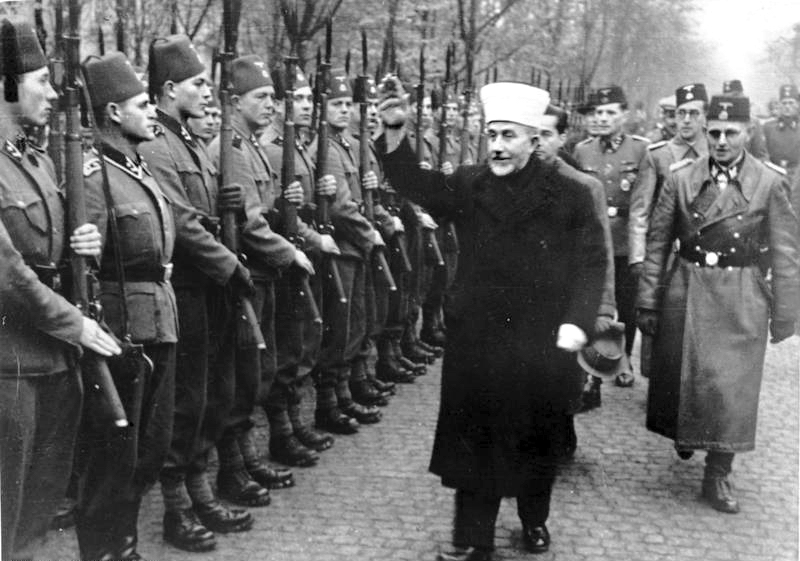
As early as the 1930s and 1940s, there were connections between leading Palestinian figures and Nazi Germany. A prominent example is Mohammed Amin al-Husseini, then Grand Mufti of Jerusalem. He actively collaborated with the Nazis, met with Hitler multiple times, and promoted antisemitic propaganda throughout the Arab world [1].
After World War II, the Arabs of Palestine—like the Jews—were offered the chance to establish their own state as part of the 1947 UN Partition Plan. Instead of seizing this opportunity, Palestinian leaders rejected the plan. They prioritized preventing the existence of a Jewish state over realizing their own national independence—an attitude that remains widespread among Palestinians to this day. This decision led them, alongside neighboring Arab states, to wage war, which they ultimately lost. As a result, the Palestinians ended up with less land and fewer options than what had originally been offered [2].
Claiming that the Palestinians’ situation is a consequence of the Holocaust denies their political agency and the impact of their own leadership’s decisions. It distorts historical reality by turning a documented collaboration between prominent Palestinian leaders and the Nazis into a narrative that portrays Palestinians as victims of the Holocaust. This constitutes a classic reversal of perpetrator and victim, aimed at spreading disinformation and deflecting responsibility. It not only downplays the historical role of Palestinian leadership but also ignores the fact that their own political choices significantly contributed to the current situation.
[1] https://www.deutschlandfunknova.de/beitrag/islam-und-faschismus-der-grossmufti-von-jerusalem
[2] https://www.deutschlandfunk.de/vor-70-jahren-die-verabschiedung-des-un-teilungsplans-fuer-100.html

12. Myth
You have to be Jewish to be a Zionist
Not true, because...
The idea that one must be Jewish to be a Zionist is incorrect. People of all faiths and backgrounds who support Jewish self-determination in their historical homeland are Zionists. Zionism is an ideological commitment to the Jewish right to a homeland—one that anyone can support, regardless of whether they are Jewish.
Just as one doesn’t have to be a woman to support women’s rights, or belong to a particular minority to oppose its oppression, anyone can stand with the Jewish people in their pursuit of self-determination and security. It is a matter of solidarity and human empathy, not ethnic or religious identity.
13. Myth
Zionism is a religious ideology
Not true, because…
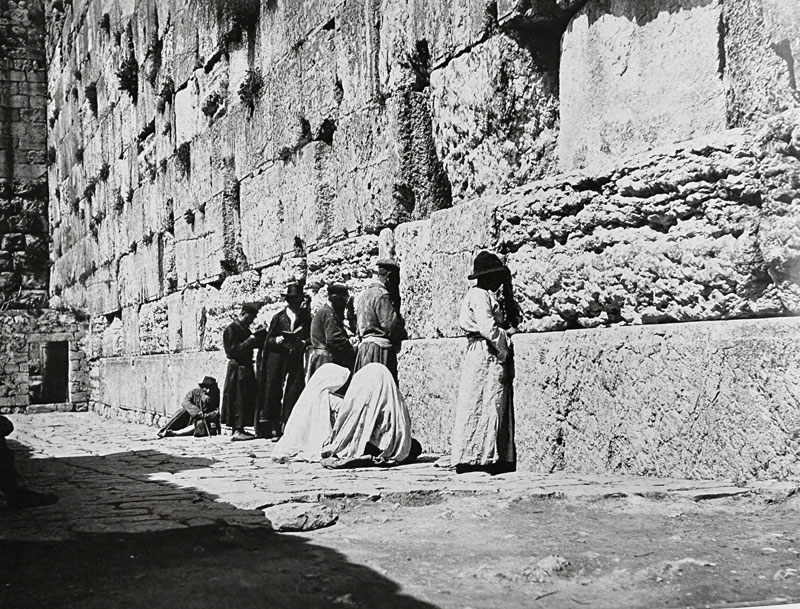
The idea that Zionism is purely a religious ideology misrepresents the actual origins and goals of the Zionist movement. While the Land of Israel and the longing to return to Zion have played a central role in Jewish texts, prayers, and holidays for thousands of years, modern Zionism emerged in the late 19th century as a primarily political and largely secular movement. Its goal was to establish a Jewish nation-state in the historical Land of Israel and to secure national self-determination for the Jewish people [1].
Within the Zionist movement, there are different streams—including religious Zionism. Its adherents believe that the Land of Israel was promised to the Jewish people by God, and that Jews have an obligation to possess and defend the land in accordance with the teachings of the Torah. However, religious Zionism is just one of several expressions of Zionism. Figures such as Theodor Herzl, the founder of modern Zionism, and many other early supporters of the movement were not religious—and in some cases were even atheists—who viewed Zionism as a political and national liberation movement.
The belief that Zionist views must be religiously motivated also overlooks the nature of Judaism as an ethno-religion, in which ethnic, cultural, and religious identities are deeply intertwined. Jewish identity includes not only religious belief, but also a culture and national belonging that have been passed down through generations. One can be Jewish without being religious or observing religious rituals.